Oxford Street Goes Traffic-Free: What's Changing and How to Get There (2026)
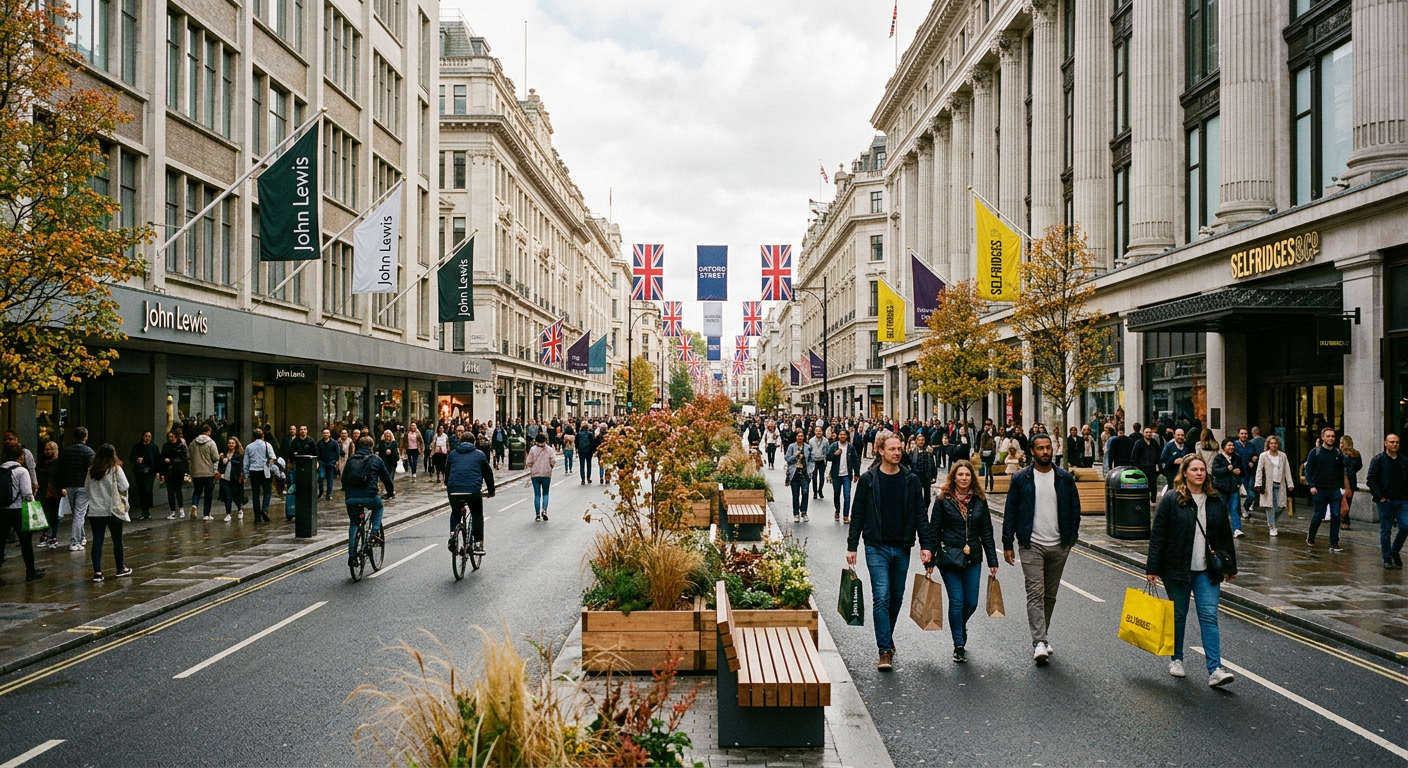
Oxford Street is now traffic-free between Orchard Street and Great Portland Street. Here's what has changed, where the buses and taxis went, and what's coming next.
Oxford Street, the UK's busiest shopping street, has started its biggest change in decades. Since Monday 26 October 2026, the stretch between Orchard Street and Great Portland Street has been closed to traffic, turning almost a kilometre of the West End into a space for people on foot. This guide covers what has changed, how the project is run, how buses and taxis now work around it, and what to expect over the next two years. Details are correct at the time of writing, so check TfL before you travel.
What has changed
The section of Oxford Street from Orchard Street (near Marble Arch) to Great Portland Street (just east of Oxford Circus) is now permanently traffic-free. This covers the busiest part of the street, including the big department stores around Selfridges, Bond Street and Oxford Circus.
- Not allowed: Private cars, buses, taxis, private hire vehicles, cycles, e-scooters and pedicabs.
- Still allowed: People on foot, mobility scooter users and emergency services.
- Deliveries: Delivery and servicing vehicles may enter only between midnight and 7am.
Who is behind it
The Mayor of London announced plans to pedestrianise Oxford Street in September 2024. A public consultation in 2025 found that 66% of respondents supported the idea, and 69% backed creating a new body to lead the work. That body, the Oxford Street Development Corporation (OSDC), was set up on 1 January 2026. On 10 August 2026 it became the planning authority for the area, taking over planning decisions from Westminster City Council and Camden Council.
Buses, taxis and getting there
Buses no longer run along the traffic-free section. They now use nearby streets instead, and some routes end at Marble Arch.
- Buses: Rerouted via Wigmore Street, Henrietta Place and Cavendish Place, with several routes terminating at Marble Arch.
- Taxis: New taxi ranks on surrounding streets, including Orchard Street, Duke Street and Great Portland Street.
- Tube and rail: Marble Arch, Bond Street (including the Elizabeth line) and Oxford Circus all sit on or next to the traffic-free stretch. Tottenham Court Road serves the eastern end of the street.
- Cycling: You can't ride along the traffic-free section, so lock up on a side street and walk in.
What's coming next
What you see now is a transitional scheme. It lets the OSDC gather data and public feedback before the permanent design goes in. The plans include:
- By end of spring 2027: Major improvement works, including new trees, seating and public squares.
- By 2028: The full transformation is due to be finished.
- During the works: Expect some temporary fencing and changes to the layout as work moves along the street.
What it means for visitors and locals
For shoppers, the biggest change is space. You can now walk down the middle of the street instead of squeezing along crowded pavements, and crossing between stores is much easier. Weekday mornings are still the calmest time to visit. If you live or work nearby, expect busier side streets as buses and deliveries shift. Wigmore Street and the roads north of Oxford Street have taken on much of the diverted traffic.
Make a day of it
Oxford Street is a short walk from some of central London's best spots. Visit the free Wallace Collection in Manchester Square, stroll through St Christopher's Place for lunch, or head south into Mayfair and Soho. For more ideas, see our free things to do in London guide, our list of hidden gems in London, or browse the London borough hubs.